

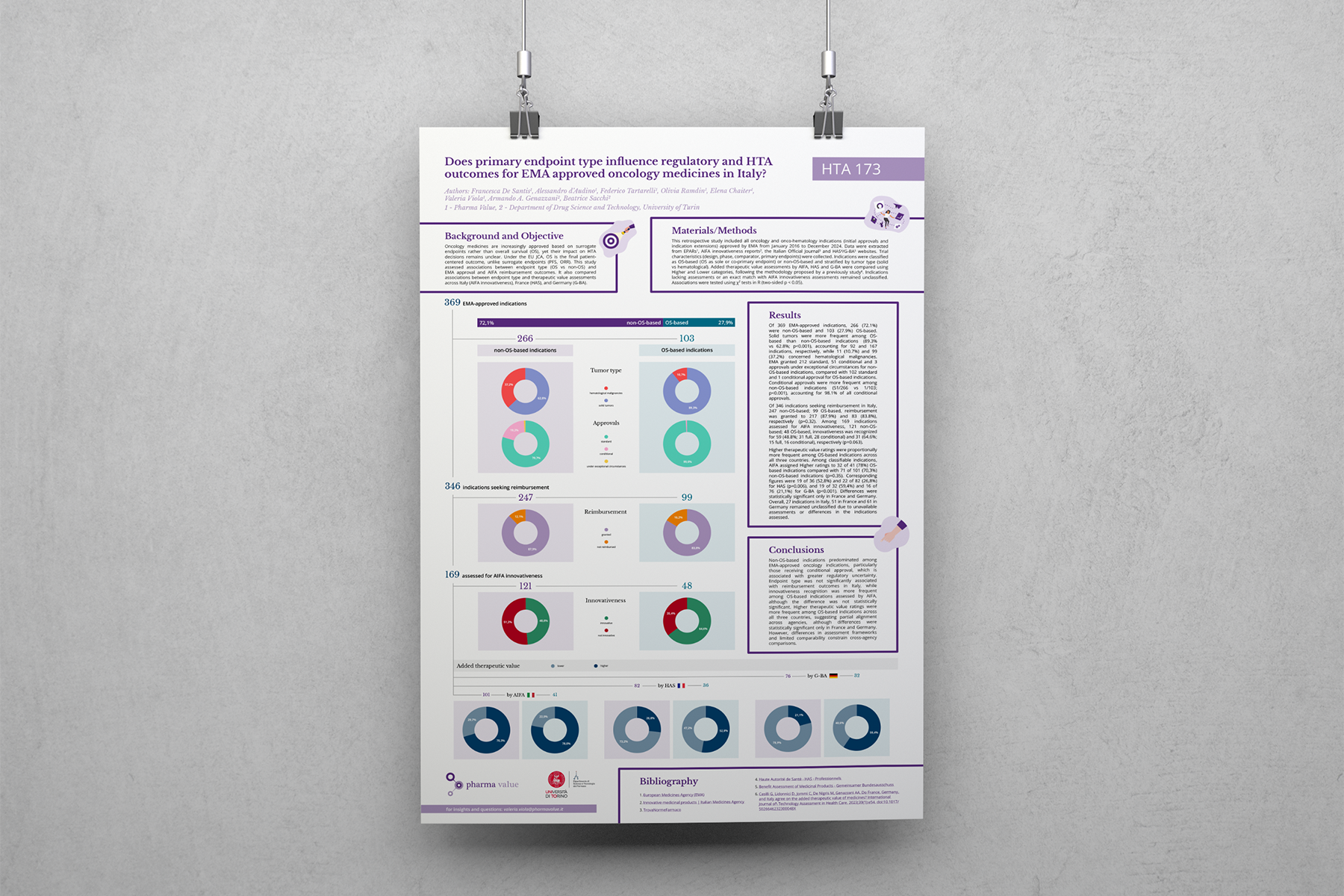
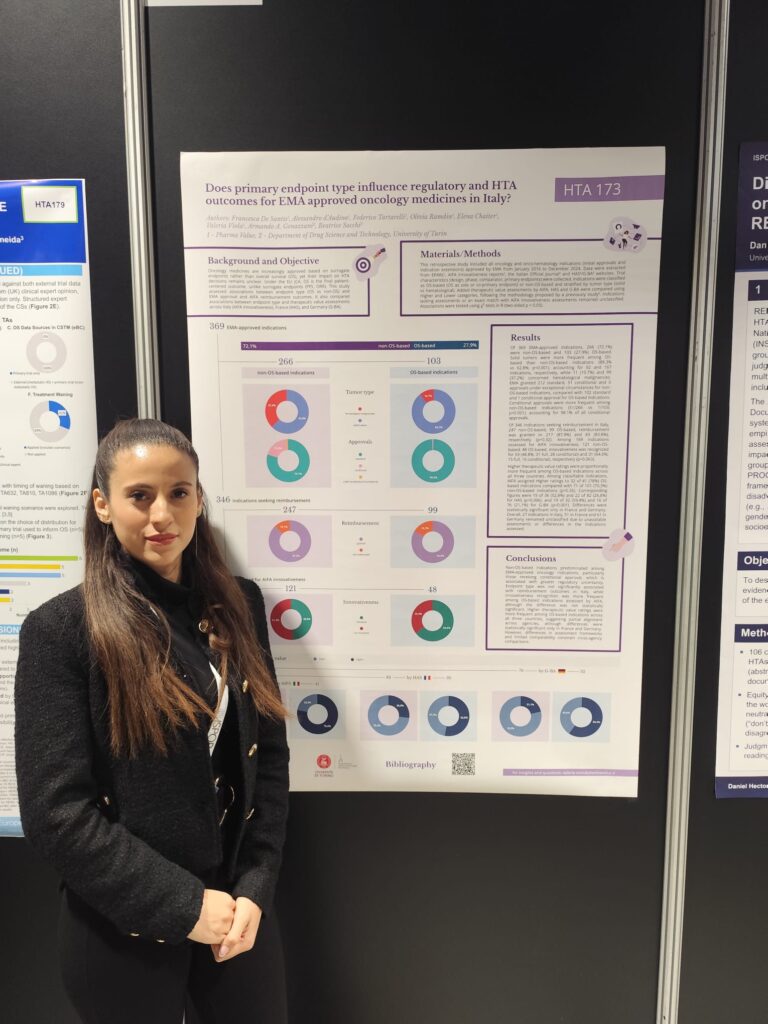
At ISPOR Europe 2026, Pharma Value presented its research poster entitled “Does Primary Endpoint Type Influence Regulatory Outcomes and HTA Assessments of EMA-Approved Oncology Drugs in Italy?”
Oncology drugs are increasingly approved based on surrogate endpoints rather than Overall Survival (OS). However, their impact on Health Technology Assessment (HTA) decisions remains unclear.
Within the European Joint Clinical Assessment (JCA) framework, OS is considered a patient-relevant final endpoint, unlike surrogate endpoints such as Progression-Free Survival (PFS) and Objective Response Rate (ORR).
Our study investigated the association between primary endpoint type (OS vs non-OS) and EMA approval and AIFA reimbursement outcomes, while also comparing therapeutic value assessments across Italy (AIFA), France (HAS), and Germany (G-BA).
Key Findings
- 72% of EMA-approved oncology indications were based on non-OS endpoints, accounting for 98% of conditional approvals.
- In Italy, endpoint type was not significantly associated with reimbursement decisions. AIFA innovativeness recognition was more frequent among OS-based indications (64.6% vs 48.8%), although the difference was not statistically significant.

Conclusions
Non-OS-based indications predominated among EMA-approved oncology indications, particularly those receiving conditional approval, which is associated with greater regulatory uncertainty.
Endpoint type was not significantly associated with reimbursement outcomes in Italy, while innovativeness recognition was more frequent among OS-based indications assessed by AIFA, although the difference was not statistically significant.
Higher therapeutic value ratings were more frequent among OS-based indications across all three countries, suggesting partial alignment across agencies, although differences were statistically significant only in France and Germany. However, differences in assessment frameworks and limited comparability constrain cross-agency comparisons.

