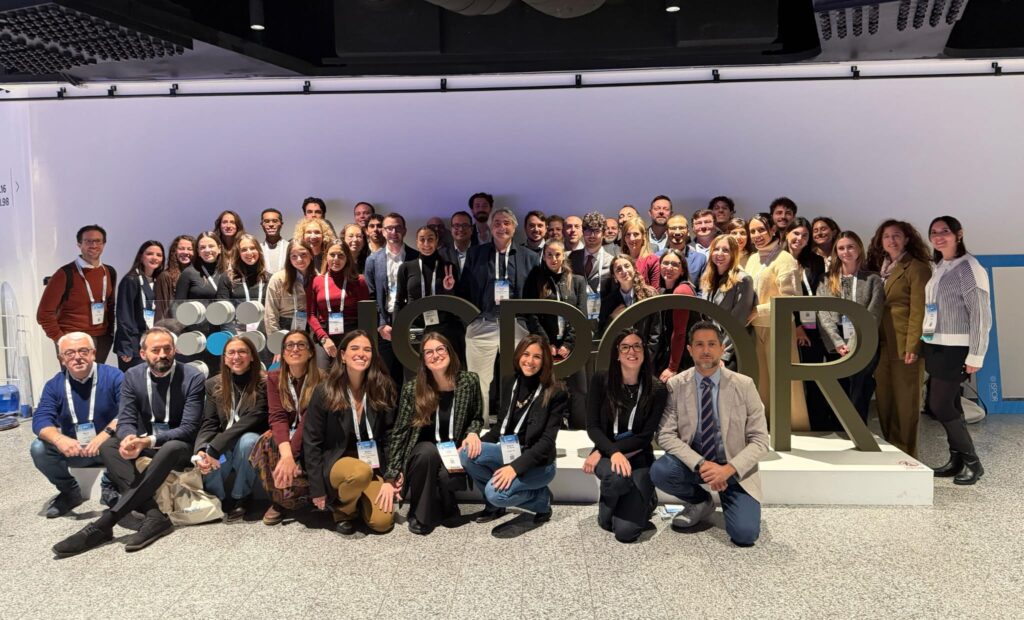


From November 9 to 11, Pharma Value attended ISPOR Europe 2026, one of the leading international conferences dedicated to Health Economics and Outcomes Research (HEOR), held this year in Vienna under the theme “Shaping the Future of Access Through Science and Policy”.
Three days of discussions and insights into the transformations reshaping the European pharmaceutical landscape, from emerging regulatory challenges and medicine access policies to technological innovation.
From the implementation of the European HTA Regulation to international pricing policies, the revision of EU pharmaceutical legislation, and the applications of artificial intelligence, here are some of the topics we followed with particular interest.
Joint Clinical Assessment: Early Experiences with European HTA
The first practical experiences with Joint Clinical Assessments (JCAs) were among the main topics of discussion.
The sessions highlighted some of the key challenges that have emerged during the initial months of implementation, including PICO definition, alignment of timelines with EMA procedures, dossier preparation, and the management of changes to therapeutic indications during the regulatory process.
Particular attention was given to rare diseases, where the limited availability of comparative studies, the use of surrogate endpoints, and small patient populations can make the assessment of clinical evidence more complex. In this context, discussions explored the role of indirect treatment comparisons, systematic literature reviews, and Real-World Evidence.
EU Pharma Package, Biotech Act and Critical Medicines Act
The revision of EU pharmaceutical legislation introduces significant changes to regulatory incentives, data protection, market exclusivity, and authorisation procedures.
The sessions also explored two major European initiatives:
- Biotech Act, aimed at supporting research, investment, and the competitiveness of the European biotechnology sector, including through new funding mechanisms, simplified clinical trial procedures, and regulatory sandboxes.
- Critical Medicines Act, designed to strengthen security of supply, European manufacturing capacity, and the resilience of supply chains for critical medicines.
Discussions highlighted the interconnections between these initiatives and their potential implications for the development, availability, and access to medicines across European markets.
Most Favoured Nation
The session “How MFN Influence Medicine Pricing and Access in EU and How Should Policy Makers Respond?”, featuring Sean Sullivan, Iria Alvarez Novoa Iglesias, and Beth Woods, explored the potential implications of US pricing policies for European markets.
Discussions focused on the consequences for national price negotiations, the use of confidential agreements and Managed Entry Agreements, and the potential impact on pharmaceutical launch sequencing.
The session also addressed the future evolution of MFN policies and presented economic analyses of the potential effects of higher medicine prices in Europe, including implications for healthcare system sustainability and population health.
The debate highlighted the growing interdependence between national pricing policies and global pharmaceutical strategies.
Artificial Intelligence in HEOR
Artificial intelligence was another major focus of ISPOR Europe 2026, with sessions dedicated to practical applications in Health Economics and Outcomes Research.
Among the examples presented, the Institute for Clinical and Economic Review (ICER) illustrated the use of AI to identify errors in cost-effectiveness models, while other contributions demonstrated approaches to converting economic models from Excel to Python.
The potential to automate certain activities within network meta-analyses, survival modelling, and HTA documentation preparation was also explored.
Alongside these opportunities, methodological limitations were also highlighted, including analytical errors, difficulties in reconstructing survival curves, and risks associated with the autonomous selection of comparators and assumptions.
The importance of human oversight, source traceability, and results validation was therefore a central theme throughout the discussions.
The ISPOR Italy Community
ISPOR Europe 2026 also provided an opportunity for the ISPOR Rome and Milan Chapters to come together, share their activities to date, and discuss future initiatives.
The meeting offered an opportunity to reflect on the progress made by both Chapters and look ahead to a new phase of collaboration, culminating in their unification under the name ISPOR Italy during the joint event scheduled for November 30 and December 1, 2026.
The event will mark an important step towards establishing a single national community and will focus on several key topics, including Value-Based Pricing, treatment comparisons, non-clinical HTA domains, MFN policies, competitive dynamics, and the implications of Joint Clinical Assessments for Italy.
For Pharma Value, ISPOR Europe 2026 was a valuable opportunity to stay up to date, exchange knowledge, and engage with international professionals and stakeholders on the transformations shaping the pharmaceutical sector.
The Pharma Value team had already attended ISPOR Europe 2025 in Glasgow and the year before at ISPOR Europe 2024 in Barcelona.
This year we leave Vienna with fresh perspectives, stronger professional connections, and plenty of ideas to bring into our upcoming activities!
See you at ISPOR Europe 2027 in Milan!