

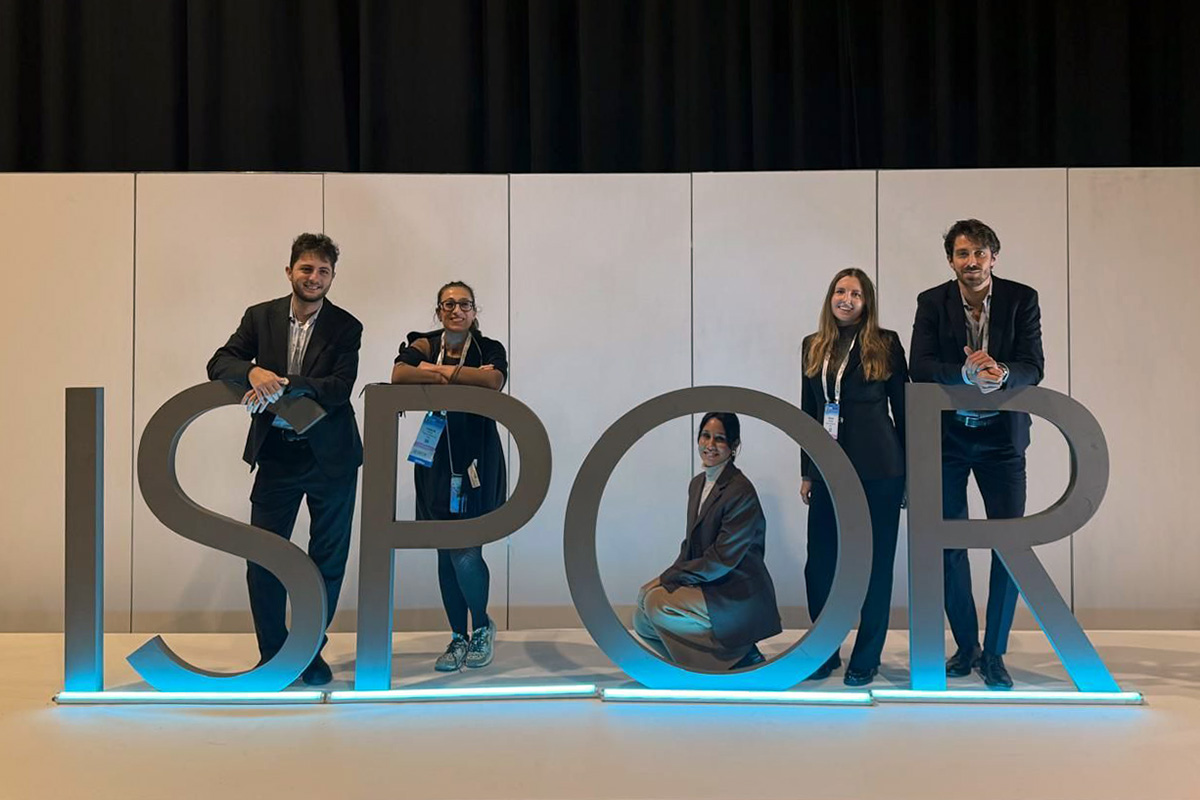
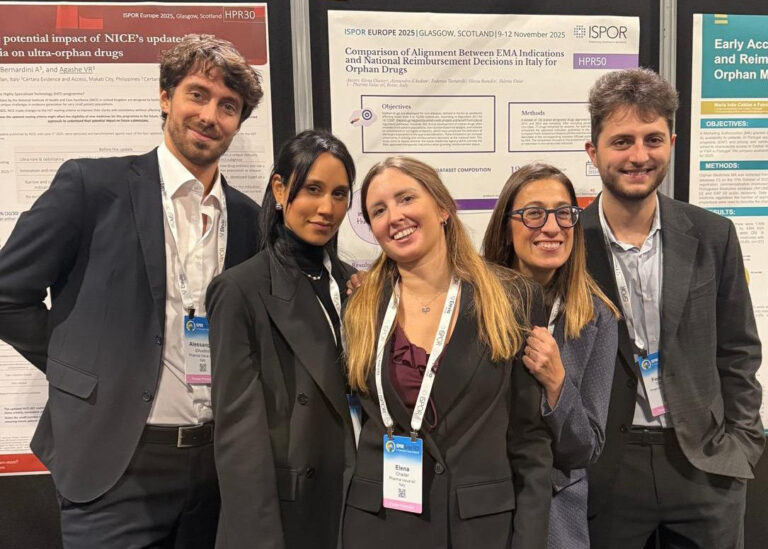
The Pharma Value team participated in ISPOR Europe 2025, held in Glasgow from November 9 to 12, 2025. The event represents a key appointment for professionals working in HEOR, market access, and health economic evaluation, as well as an important opportunity to reconnect with partners and clients and to strengthen networking activities.
Pharma Value’s participation in ISPOR Europe is part of a continuous engagement with the conference: the team had already attended ISPOR Europe 2024 last year, and in 2023 it was present in Copenhagen for ISPOR Europe 2023 with two posters presented: Evolution of the Utilization of the Aifa 5% Fund for Orphan Drugs and Rare Diseases and Regional Access Timelines in Italy: Factors Affecting Speed and Equity.
ISPOR Europe is recognized as the premier European conference dedicated to health economics and outcomes research (HEOR). This year’s theme, “Powering Value and Access Through Patient-Centered Collaboration,” emphasized the importance of strengthening collaboration among healthcare system stakeholders to accelerate patient-centered decision-making on healthcare value and access.
Among the many sessions on the agenda, the Pharma Value team followed with particular interest those focused on the new European HTA regulation, with special attention to orphan drugs. Significant attention was also given to Real World Evidence, the use of artificial intelligence for evidence synthesis, and discussions on how geopolitical and economic changes are reshaping the global landscape of pharmaceutical pricing and access.
Posters Presented at ISPOR Europe 2025
On the occasion of the international conference, Pharma Value presented three posters:
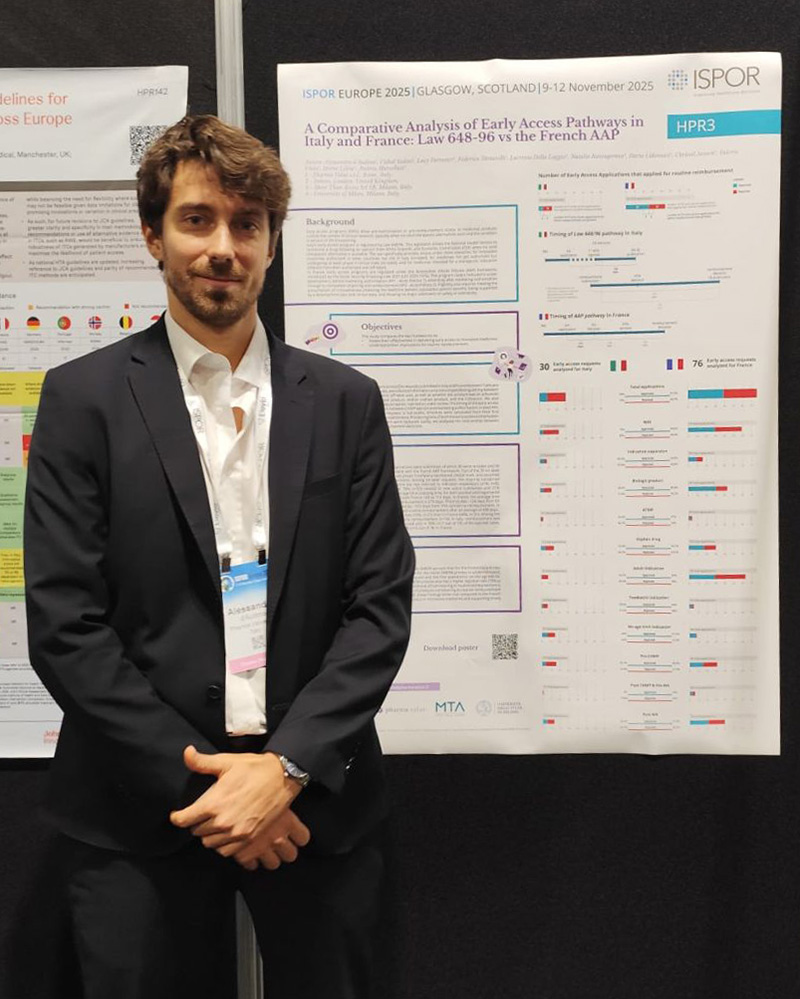
A Comparative Analysis of Early Access Pathways in Italy and France: Law 648-96 vs the French AAP was developed by the Pharma Value team in collaboration with Inbeeo, More Than Access, and the University of Milan.
This study compares the two frameworks to assess their effectiveness in delivering EA and implications for routine reimbursement.
Italy’s Law 648-96 enables Early Access (EA) to medicines not yet authorised nationally but that are either approved abroad, under investigation in clinical trials, or used off-label based on supporting phase II clinical data. France’s Early Access Authorisation (AAP) programme similarly allows temporary access to products with or without a marketing authorisation for patients lacking therapeutic alternatives, until are imbursement decision is made.
The results show Italy’s program is less efficient, with significantly longer decision times (169 vs 114 days), a higher rejection rate (70% vs 49%), and a much slower transition to routine reimbursement (498 vs 275 days), establishing the French AAP as the more effective framework for timely patient access.
This abstract was selected among the Top 5% Finalists for the ISPOR Europe 2025 Research Presentation. We were extremely proud to receive this important recognition, which highlights the relevance and quality of the work presented.
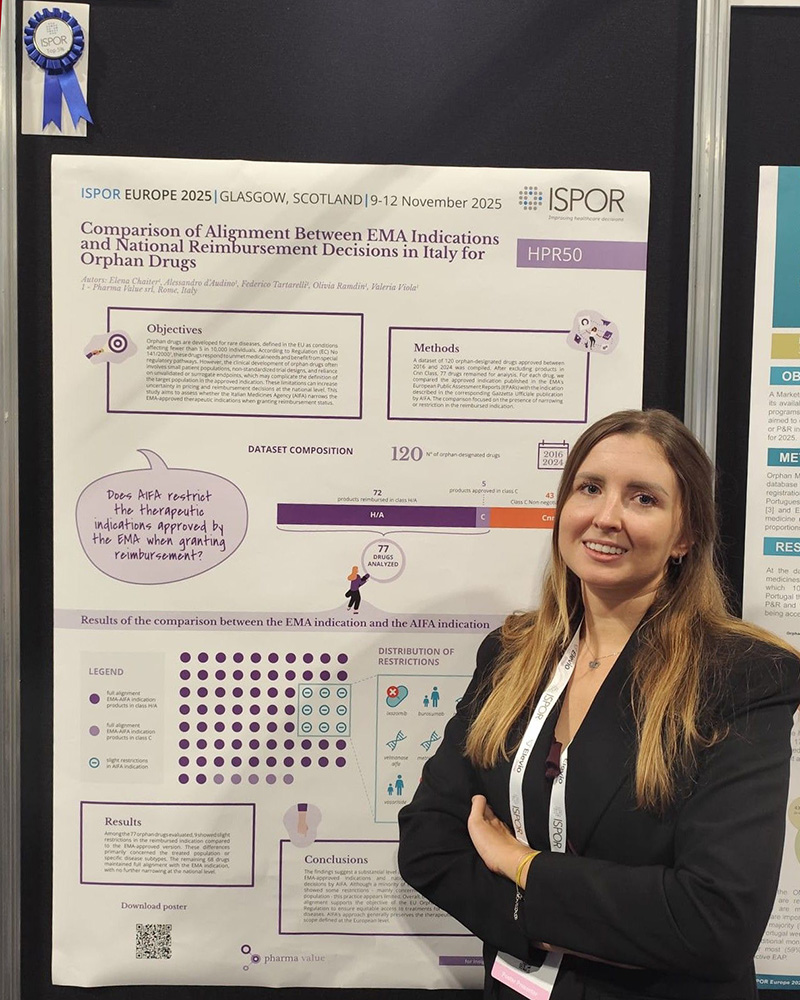
This study aims to assess whether the Italian Medicines Agency (AIFA) narrows the EMA-approved therapeutic indications when granting reimbursement status.
Orphan drugs are developed for rare diseases. According to Regulation (EC) No 141/20001, these drugs respond to unmet medical needs and benefit from special regulatory pathways. However, the clinical development of orphan drugs often involves small patient populations, non-standardized trial designs, and reliance on unvalidated or surrogate endpoints, which may complicate the definition of the target population in the approved indication. These limitations can increase uncertainty in pricing and reimbursement decisions at the national level.
Among the 77 orphan drugs evaluated, 9 showed slight restrictions in the reimbursed indication compared to the EMA-approved version. The remaining 68 drugs maintained full alignment with the EMA indication, with no further narrowing at the national level.
Overall, the observed alignment supports the objective of the EU Orphan Drug Regulation to ensure equitable access to treatments for rare diseases. AIFA’s approach generally preserves the therapeutic scope defined at the European level.
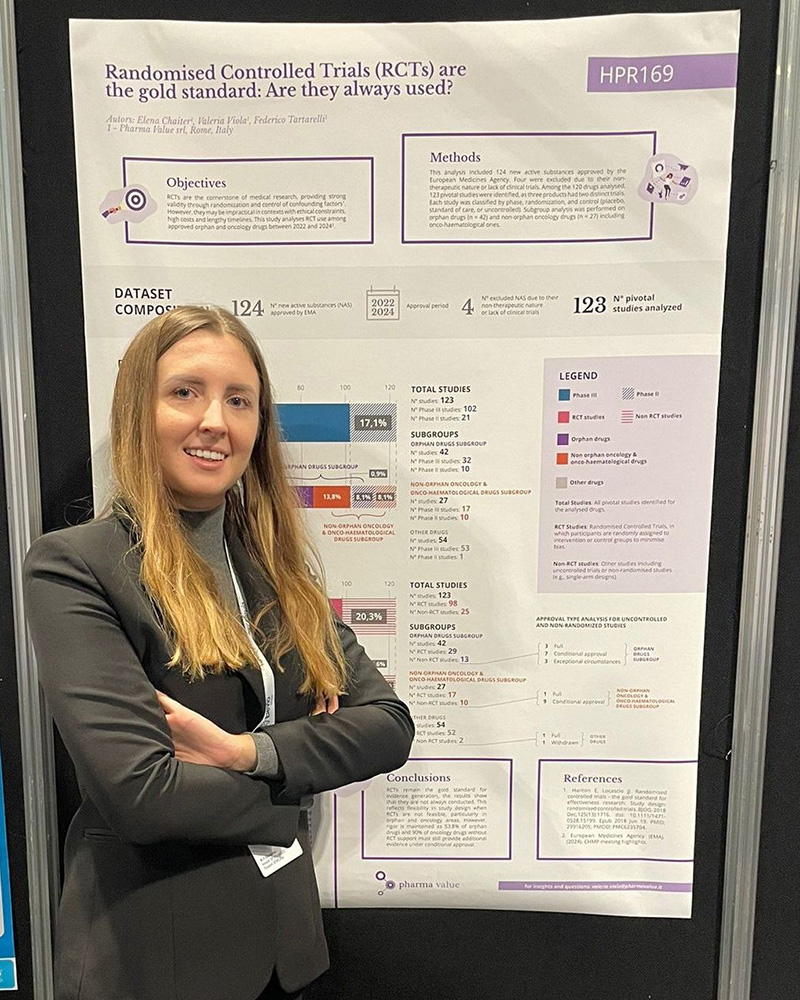
Randomised Controlled Trials (RCTs) are the gold standard: Are they always used?
This study analyses RCT use among approved orphan and oncology drugs between 2022 and 2024.
RCTs are the cornerstone of medical research, providing strong validity through randomization and control of confounding factors. However, they may be impractical in contexts with ethical constraints, high costs and lengthy timelines.
RCTs accounted for 79.7% of all studies. The proportion was lower among orphan drug studies (69.0%) and non-orphan oncology studies (63.0%). Conversely, the proportion of uncontrolled and non-randomized studies was higher in these subgroups: 31.0% in orphan drug studies and 37.0% in non-orphan oncology studies, compared to 20.3% in the dataset.
RCTs remain the gold standard for evidence generation, the results show that they are not always conducted. This reflects flexibility in study design when RCTs are not feasible, particularly in orphan and oncology areas. However, rigor is maintained as 53.8% of orphan drugs and 90% of oncology drugs without RCT support must still provide additional evidence under conditional approval.
ISPOR 2025: a few key takeaways we’re bringing home
The new European HTA Regulation
There was extensive discussion on the challenges that remain and those expected in the coming years, particularly in the rare disease space. This will require strong coordination, methodological clarity, and adaptability from all stakeholders.
AI for evidence synthesis and systematic reviews
No longer just a research topic: AI was a recurring theme among exhibitors and panel discussions. It is emerging as a concrete accelerator for evidence synthesis processes, with immediate impact on the speed, quality, and scalability of assessments.
RWE in European decision-making
Real-world evidence continues to grow in importance, supporting more timely and informed decision-making. For patients, this means responses that better reflect their real needs and a reduction in clinical uncertainty, especially in complex therapeutic area.
Navigating global policy shifts
It became clear that geopolitical and economic shifts are reshaping the global context of pharmaceutical pricing and access. Transformations in key markets, from the United States to China, including Medicare price negotiations, MFN policies, and emerging value-based frameworks, are directly influencing Europe’s ability to ensure affordability while sustaining innovation.
Preparing for ISPOR 2026
Participating in ISPOR Europe is always a highly valuable experience, not only for the high quality of the technical content shared, but also for the important opportunities for networking and for strengthening professional relationships. We are proud to have once again been among the nearly 6,000 participants from all over the world and to have taken part in a particularly rich program, which included more than 140 sessions dedicated to HEOR topics and nearly 3,000 research posters.
Among these, our three analyses generated interest and fostered discussion, contributing to the ongoing debate on the challenges of pharmaceutical access in Italy and across Europe. We now look ahead with enthusiasm to ISPOR 2026, with the aim of continuing to participate in this important conference and to bring new scientific contributions.

